Psephocracy, beleaguered

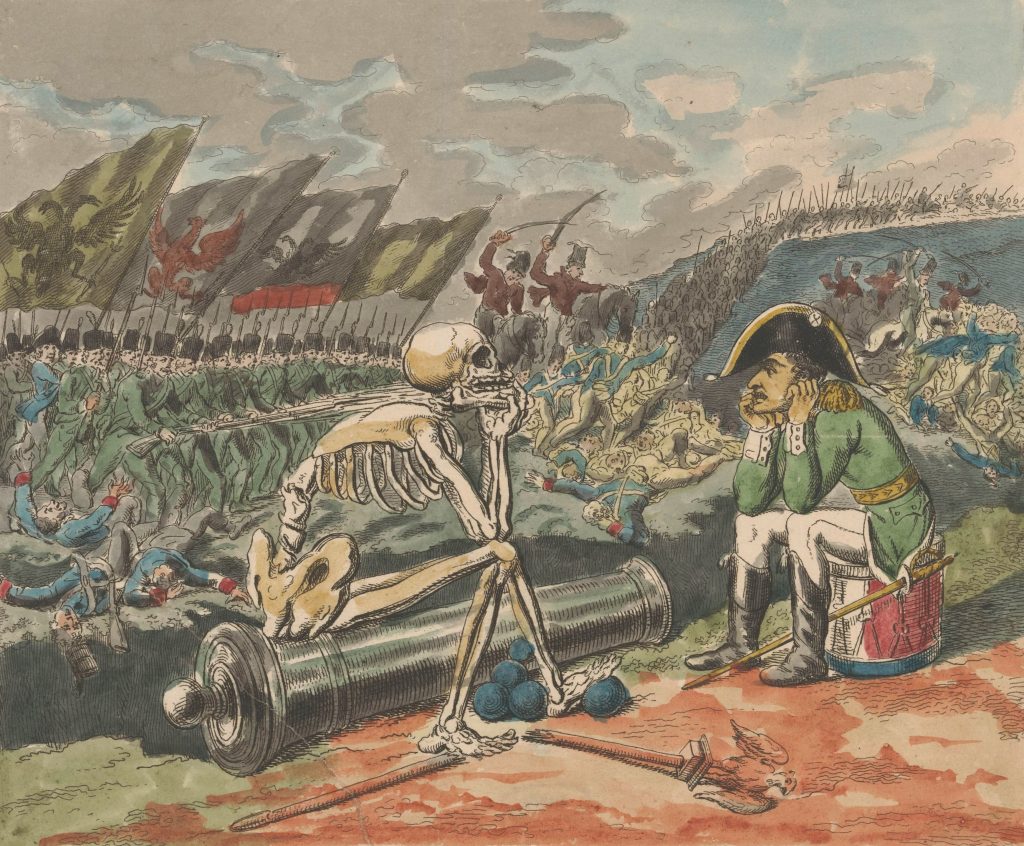
An 18th-century comic print, in color, of a skeleton seated on a cannon, facing Napoleon, seated on a drum, as soldiers fight and die behind them
Thomas Rowlandson, “The Two Kings of Terror” (1813)

In 2016, I wrote an article for the New Yorker about whether voters are well informed enough for democracy to succeed. It was published a week before the presidential election that year, so the situational irony was kinda heavy.

It’s a complex problem. Voters are remarkably ignorant, and crowds of them are not wiser than they are as individuals, because their ignorance has a shape—errors in one direction aren’t balanced out by errors in another. Nonetheless, democracy doesn’t fail all that often, and has some incontrovertible up-sides; democratic countries almost never have famines, for instance, and get into wars with one another infrequently.

So how does democracy manage to work, when it does? No theorist thinks it’s infallible, I hasten to say. The only question is why it isn’t even worse. One theory: retrospective voting. Maybe it’s enough if voters react according to whether they’re happier than the last time they went to the ballot box.

It’s not hard to see how retrospective voting could fail. Thoughtless voters might punish an incumbent for misfortunes that are coincidences, beyond his control, such as hurricanes or plagues. In fact, researchers have found that voters punish incumbents when their hometown sports team has a bad season. Timing might also interfere. Voters could punish an incumbent for a slow-to-bloom unhappiness the seeds of which were planted by his predecessor. And they could fail to reward an incumbent whose policies wouldn’t yield happiness until after the next election. Such a timing error, in my opinion, is part of what happened to Biden and the Democrats in 2024. Biden stood up for unions as no President of either party had done for decades, but four years of solidarity, after five decades of backsliding, neglect, and even sabotage, weren’t enough to bring about a change in economic potency that a considerable number of workers could yet feel. And while some of the economic stimulus from Biden’s Inflation Reduction Act may have begun to register, most of it was yet to come (the overwhelming majority, by the way, will be in red states), and the mitigation of climate change that it was designed to induce was even farther off in the future. Of course, even when that mitigation does arrive (if it arrives, that is—Trump looks likely to sabotage it), it’s going to arrive as an absence of harm, which by definition will be hard for anyone to have a vivid perception of. The world needs to be saved, but no one has yet figured out how a politician can win points for keeping it from ending.

In America, retrospective voting is buttressed by the federal government’s cumulative structure. The federal government’s operations are largely stable from one administration to the next, and when change happens—when Congress passes a law creating a new agency, or zeroes out an existing agency’s budget—voters notice the alteration in their well-being, and vote for or against. If a new President adds something to the federal government that no one wants, or is ready for, it is likely to get discarded by the next administration. And contrariwise, if a new President takes away something many people need and appreciate, it gets put back. The Affordable Care Act (Obamacare) didn’t become a success the moment it was signed into law; it was proved a success when, a few years later, it turned out to be too popular for Republicans to dare dismantle it. Like Social Security, like Medicare, it became part of the core collection of legislative decisions that the institution of federal government perpetuates. Bureaucratic inertia has a bad reputation, but it’s the memory of democracy. This is the part of Edmund Burke’s conservative political philosophy that even liberals are tempted to agree with: muddling through, over the course of years, brings about progress when it’s done incrementally rather than radically, and although the result may look like a Rube Goldberg machine, assembled piecemeal and without foresight, it’s the result of experiment, and bears pragmatism’s warrant. Reformers should be cautious about renovating it wholesale.

Which is why it’s more than a little terrifying that an unelected Elon Musk is boasting that in the past few weeks, he has fed whole agencies of the federal government into the wood chipper. He’s yanking memory cartridges out of a benevolent HAL-9000; he’s banjaxing the institutional memory that is democracy’s mechanism for self-improvement. Trump, unusually for a Republican, didn’t run on a platform of destroying the social safety net. He ran on a platform of deporting immigrants on a massive scale and ratcheting up tariffs—both sufficiently horrible policies, in my opinion—as if in quiet recognition of the fact that many of his constituents relied on and valued federal aid. By destroying programs like America’s charitable efforts at disease prevention abroad, and its funding of biological research at home, Musk is dismantling systems whose social ramifications, and subsequent political effects, he is highly unlikely to understand. And by doing it at such a scale, so quickly, there’s a risk that he will overwhelm the capacity of retrospective voting, which works best when policy changes are incremental, to respond to him meaningfully. He’s wiping the hard drive of democracy.

Speed and irreversibility are no doubt exactly Musk’s intention. But it’s nonetheless very bad news! Before the election, I thought the worst of the second Trump administration would be concentration camps for immigrants. But recently I’ve become worried as well about the acceleration of disease and global warming. Last week Kennedy cancelled the annual meeting where the nation’s health leaders were to choose which strains of influenza next fall’s flu vaccine should protect against, and he has been cavalier about the outbreak of measles spreading in West Texas. Meanwhile, it looks like Trump is going to zero out as many as he can of Biden’s efforts to reduce fossil-fuel emissions, including by bringing to a sudden halt almost all wind-power developments in America. A few paragraphs above, I worried that voters might unfairly punish a leader who happened to preside over hurricanes or plagues. But voters would be perfectly justified in punishing politicians who bring about conditions that make hurricanes and plagues more likely and more deleterious by abetting global warming and quack medicine.

Musk’s dismantlings have happened too recently for most people to have yet felt the effects. Scientists have lost grant funding, and scholars of public health are terrified, but mass deaths haven’t yet occurred. In my Instagram feed, park ranger after park ranger is posting about having his dream of national service shattered, but most people visit national parks in the summer, which is still a few months off. It won’t be that long, however, and maybe sooner than we expect, before people do feel effects vividly. It’s entirely possible that the economic consequences of Trump’s mismanagement will hit first, which I think would be a blessing—I would much rather live through a recession at the hands of disbelievers in Keynesianism than through a bird-flu pandemic under a public-health system run by disbelievers in vaccines. When people do feel the consequences, however—when they perceive their prosperity, their health, their well-being, and even their lives to be endangered—the political reaction may be beyond current calculations. Think of what happened to George W. Bush’s administration after the political and social order broke down in New Orleans following Hurricane Katrina. The seeds for the Occupy movement, and for mutual care efforts during the Covid pandemic and even for subsequent protest waves such as Black Lives Matter, were planted then, I suspect. Now imagine facing a pandemic with the knowledge that no vaccine is on the way, or days of orange wildfire smoke, and the washing away of a city in Florida, under a President whose actions guarantee that the temperature of the world will continue to rise steadily. I’m not sure anyone in politics today is ready for that lion to awaken.

Some personal news

On an incongruously lighter note: I’m the member of the month at my gym, Cross Fit South Brooklyn. You can read a Q&A with me about it here.
Swimming in the undertow

My first inkling that Trump was where something had gone badly wrong in the American psyche came in the fall of 2015, when Peter and I went to a bar in Williamsburg to hear a friend read a short story. The emcee took a turn at the microphone himself, as his reward for having organized the literary evening, but instead of reading a story or poem, he read aloud from one of Trump’s ghost-written books. The choice of text was meant to be a joke, I think. A few sentences would have conveyed the gist: the book was horrible, and obvious in its horribleness, and representative in its horribleness of the person whose name was on the cover. The emcee, however, read for what felt like an hour.

It was excruciating. If the point was that we Brooklyn literary hipsters were superior to someone like Trump, and knew better than to be taken in by him, why was the emcee reading so many of his words? And why were we listening? I couldn’t figure out what was going on or what the emcee was getting out of it. He seemed to be in the grip of something, and we were in his grip. It was all happening under the sign of irony, but irony wasn’t the right word exactly. In retrospect I should have taken warning; at the time, of course, I just wanted it to be over.

I’ve thought back to the night many times in the past four years. It came to mind most recently when I was reading The Oppermanns, a remarkably lucid novel by Lion Feuchtwanger set in, and written in, 1933. The book, recently reprinted by the British feminist press Persephone Books, describes the lives of four Jewish siblings in Berlin, owners and managers of a chain of furniture stores, as they try to adjust to the rise of Hitler, referred to in the text only as “the Leader” or as “the author of the book called Mein Kampf.”

About a third of the way in, one of the siblings, Gustav Oppermann, who’s a bachelor and a bit of a playboy, in a bibliophile kind of way, is visited by a friend, Alfred François, the rector of an elite high school where two of Gustav’s nephews are students. One nephew has recently had a run-in with a new teacher, who happens to be a Nazi, and the rector wants Gustav to persuade his nephew to apologize. It has become dangerous to make Nazi enemies, and François intuits that he won’t be able to continue protecting Gustav’s nephew indefinitely. Once Gustav hears the story, however, and realizes that his nephew was in the right, he refuses to intervene, as a matter of principle, and the rector amiably gives up. After all, he doesn’t really want Gustav’s nephew to knuckle under. Having tried their best, to no avail, he and Gustav retire with relief to Gustav’s library, to chat about books. They are the most erudite characters in the novel, and Feuchtwanger pokes gentle fun at their erudition: the rector is said to be writing a book about the influence of the ancient Greek hexameter on an 18th-century German poet, and Gustav, to be writing a biography of a philo-Semite playwright from the same period. As a slightly perverse hobby, Gustav collects editions of the infamous anti-Semitic tract The Protocols of the Elders of Zion, then back in the zeitgeist, thanks to the rise of Nazism. After showing off his newest copy of the Protocols, Gustav picks up Mein Kampf and starts to “read some particularly juicy passages to his friend.”

Rector François covered his ears. He did not want to listen to the incorrect, distorted German of the book. Gustav spoke to him soothingly. On account of his repugnance for the style, he had evidently missed the comic quality of the content. He refused to be dissuaded from quoting a few passages.

Gustav proceeds to read aloud a few samples of Hitler’s name-calling, allegations, and conspiracy theories. “Rector François, disgusted as he was, had to laugh over this accumulation of nonsense,” Oppermann writes.

I felt the edge of this passage’s irony rather keenly.

I’ve been trying to stay logged out of Twitter, so I don’t know whether this week we’re making fun of people who see analogies between Trumpism and Nazism, or making fun of people who resist such analogies. In either case, I admit that as I read The Oppermanns, the analogies seemed to draw themselves. A character insists to himself that he still loves his country, despite what it has become. A character discovers, to his chagrin, that even people dear to him would rather minimize the new outrages to decency than see them for what they are (“It was disgusting to read the papers and disgusting to hear the row the Nationalists made. But who took that seriously?”), and that even people who are hurt by the new regime quickly accept their injury as part of a new status quo (“It was an old story that the Nationalists were dirty dogs. There was no need for anyone to come and tell them that”). What little I know of Q-Anon sounds very silly, but you would probably laugh over the claims in the Protocols of Zion, too, if, like François, Gustav, and (in 1933) Feuchtwanger, you didn’t know what they led to.

After a while, exhausted by my pessimism, I started to check my analogical bent by telling myself that it makes a difference that Trump does not have a paramilitary force at his command, independent of government control, as Hitler did, and that the misguided anarchists of our day have broken shop windows and mau-maued outdoor diners but have not yet given white supremacists the pretext that they are looking for—that is, our anarchists have not yet burned down the American equivalent of the Reichstag. And then I learned this week that a teenage white supremacist Trump supporter, responding to a call for law and order on Facebook, gunned down three protesters in Kenosha, Wisconsin, killing two of them, and that the shootings were later characterized by several pro-Trump TV pundits as a natural response to the protests in Kenosha, which the pundits saw as civic breakdown. So now the threat of attacks from vigilantes is indeed part of our political reality, and so is disingenuous justification of such attacks, and I have to fall back on consoling myself with the thought that the white supremacist in this case was a volunteer, not part of an organized militia. At least so far as we currently know. (A more sturdy consolation is that the American communities of color dog-whistled about and gaslit by Trump and the Trumpists are much more numerous, and therefore much less vulnerable, than Germany’s Jewish citizens were in 1933, when they comprised less than one percent of that country’s population.)

There’s a minor character in The Oppermanns named Friedrich Wilhelm Gutwetter who might be a portrait of Martin Heidegger. (Of course it’s possible that Feuchtwanger didn’t mean the reference to be that specific; there were no doubt many quisling intellectuals at the time.) At the opening of the novel, Gutwetter is a harmless-seeming, starry-eyed writer who happens to be fashionably pessimistic about the prospects of Western civilization. Since he’s oblivious to mere worldly concerns, it’s convenient that he is supported financially by Gustav Oppermann, who believes in his genius. When Gustav goes into exile, Gutwetter regrets his patron’s decision to leave with a curiously intense indignation, telling a mutual friend,

This country is about to give birth to a great new type of humanity. We have the enormous luck to be present at the birth of this gigantic embryo and to hear the first babblings of the noble monster. And our friend Gustav goes and runs away because one of the outcries of this nation in travail is offensive to his ears?

Gutwetter’s obliviousness to worldly matters, the reader senses, is starting to acquire an edge of intentionality. Gutwetter brings himself to accept Gustav’s exile to the extent of asking if he may borrow books from the library that Gustav has had to leave behind. Of course Gustav says yes. Before long Gutwetter succeeds in working his ideas about the new era’s new man into print, and soon he is enjoying a popularity that he believes to be world-historical:

He was not surprised that history had now, at last, made his, the poet’s, vision come true. The Nationalists, however, were surprised to find such a voice as his raised on their behalf. Almost all scholars, almost all artists of any standing, had turned their backs on the Nationalists. What a bit of luck it was that a great writer should now suddenly come forward to espouse their cause!

Feuchtwanger also makes an intriguing attempt to fathom the economics of fascism. He imagines that the Oppermanns have a less-successful rival in furniture-making, Heinrich Wels Junior, “a hard-working, reliable, slow-thinking man” whose error, in business strategy, is that he persists in having his employees craft tables and chairs by hand. By standardizing the designs of their furniture and by producing them more cheaply in factories, the Oppermanns have long been able to undercut his prices. “Had the recognition of solid merit died out in Germany?” Wels asks, aggrievedly. Well, no, Feuchtwanger explains; it’s just that most consumers care more about price. When Nazism comes along, Wels embraces it because “it freely expressed what Heinrich Wels had long secretly felt, namely that the Jewish firms with their cut-price methods were responsible for Germany’s decline.” After the Nazis put a higher tax on goods from the Jewish firm’s larger stores, Wels is able to come a little closer to competing with the Oppermanns on price—close enough that the new social stigma associated with buying from Jews is sometimes able to make up the difference.

A disconcerting aspect of The Oppermanns is that its moral universe seems continuous with ours—it’s a world in which people envy their neighbors’ apartments, and have mixed feelings about some of the poems in the national literary canon, and in which teenagers jockey for a chance to drive the family car—and incommensurate with that described in such Holocaust literature as Tadeusz Borowski’s This Way for the Gas, Ladies and Gentlemen. And yet one world turned into the other. Feuchtwanger is aware that the Nazis were setting up concentration camps, and even arranges for one of his characters to be imprisoned in one, but he doesn’t understand the full human meaning of such an institution; no one at the time could have. The book takes on an extratextual pathos; the reader realizes, that in 1933 Feuchtwanger couldn’t imagine that expropriations, beatings, humiliations, exile, and assassinations weren’t as bad as it could get.

An afterthought: While reading Jamelle Bouie’s roundup of the rightwing pundits who are acclaiming Kyle Rittenhouse for killing protesters in Kenosha, a link to which I have added above, I realized that the Rittenhouse story has a more specific parallel in The Oppermanns: When a teenager in Alfred François’s school, stirred up the new Nazi teacher’s fiery rhetoric, stabs to death a journalist who has made fun of Hitler’s writing style, Nazi pundits extenuate and even praise the murder in terms very much like those that Tucker Carlson, Ann Coulter, and others have used to justify Rittenhouse’s killings: “It soon turned out that [Rittersteg] was no scoundrel but a hero. The Nationalist newspapers published his photograph. They pointed out that, although the young man’s deed could not be unconditionally approved of, it was nevertheless easy to understand that a German youth would be aroused to do violence on account of the dead man’s dastardly assertions.”

Kashua, Mbue, and Platzová

On 18 September 2016, I moderated a panel at the Brooklyn Book Festival called “Occupy and Resist,” which featured the writers Magdaléna Platzová, Sayed Kashua, and Imbolo Mbue. Here’s the introduction I gave:

I’d like to try to have a conversation this afternoon about the place of politics in literature, given that all three panelists have written about the changes that political realities and politial ideals make to people’s lives. But before we start that conversation, I feel as though I should state, for the record, that the three books are very different, and as a way of introducing the panelists, I’d like to say a little about how they’re different.

Sayed Kashua is an Arab writer who now lives and teaches in Champaign, Illinois, but grew up in Tira, a small Arab city in central Israel. He’s the author of two novels, a memoir, and a hit television series. His hilarious, brutal, and urgent new book, Native, a collection of columns that he wrote for the liberal Israeli newspaper Haaretz, describes his move into, and then out of, an upscale Jewish neighborhood in west Jerusalem. Describing the early days of his move, Kashua jokes about how unnerving he finds the high water pressure, and how unsettling it is that municipal functionaries visit regularly to deliver mail and take away garbage, along streets ornamented with such luxuries as traffic signs and sidewalks—the implication being that these amenities were lacking in the Arab neighborhoods where he had previously lived. His humor, in other words, has a political edge. At times the edge grows so sharp that he drops humor and writes with plain pathos—as, for example, when he relays the accounts his children give him of being hurt by the casual cruelty of classmates giving voice to anti-Arab bias. Now and then Kashua does mention political events and controversies in Israel, the West Bank, and Gaza, but for the most part, the politics in Native is the politics of everyday life. A friend of his, quoted in a 2015 New Yorker profile of Kashua, called it “the kind of politics that arises from the dirty dishes in the sink.”

Though Kashua and his family are Arab, he wrote the first-person essays in Native in Hebrew, the language in which he was educated from high school on. I’m putting myself in a bit of peril by mentioning this, because in one essay he makes fun of people who incessantly ask him, “Why do you write in Hebrew?” But since American readers will be reading his book in an English translation, which, though very elegant, obscures this provenance, I think it’s worth bringing up. There’s a politics of translation, too, after all. When Kashua’s daughter declines to play in a recital scheduled to celebrate Israel’s Independence Day, for example, she explains to her music teacher that her family refers to the anniversary as Nakba, a commemoration of the expulsion of Palestinians from their homes.

Imbolo Mbue is a native of Limbe, a seaside city in the West African nation of Cameroon, and has lived in New York City for more than ten years. The young couple who are the heroes of her rich, vivid debut novel, Behold the Dreamers, share her geographic origin and are trying to make the same migration. The recent immigrant Jende Jonga lands a job as chauffeur for a wealthy executive at Lehman Brothers. Jende’s wife, Neni, joins him in the city, along with their son, and goes to school with the hope of becoming a pharmacist. Jende’s working papers are only temporary, however, and his residency in America uncertain. As Jende drives his employer’s family around, he becomes an intimate witness of their lives and, thanks to his cheerful manner, to some extent a confidant—an entanglement that becomes more complex after Neni goes to work briefly for the family, too, as a maid and babysitter. If one axis of the novel runs between Cameroon and New York, another runs between the Lehman executive’s home on the Upper East Side and Jende and Neni’s home in Harlem—between a wealthy white American world of status, convenience, secrets, anxiety, and loneliness, and a more communal and informal world of struggling, exiled Africans, where meals may require hours of preparation and may be eaten happily on the floor. This isn’t a conventional American immigrant’s novel, however; the axes cross in unexpected ways, and the story becomes quite dark, before the end.

Jende and Neni also live in a world in translation, speaking a mix of English, French, Cameroonian Pidgin English, and native African languages. Jende worries that his immigration lawyer might be mbutuku and refers to his native country Cameroon as pays. At the novel’s start, Neni is flummoxed when her precalculus instructor says he has a boyfriend, but by novel’s end, she and her husband have become so fluent in American culture that they’re able to poke fun at the typical Cameroonian’s taste in U.S. consumer goods.

Magdaléna Platzová‘s meditative and resonant novel The Attempt has two storylines. In the present, a student of history named Jan is seeking for the truth about his ancestry, which may or may not have to do with the novel’s second storyline, which takes place in the past—in the early twentieth century, to be exact—and concerns two anarchists, at one time lovers and later friends, one of whom, Andrei, spent 14 years in prison for attempting to assassinate an industrialist who violently suppressed a strike. Neither the present-day story nor the historical one is told in sequence, and much of the novel’s art consists in the way Platzová interweaves the two. But though the major axis in Platzová’s book is chronological, geography matters to her as well. Jan, like Platzová herself, is Czech; the would-be assassin whose story fasciantes him was Russian; and the industrialist and his heirs, whom Jan interviews, are American. It’s in America that the novel takes place—a country where Platzová herself, the author of six books, has both studied and taught, though today she lives in Lyon, France.

The Attempt has been deftly translated from the Czech by my friend Alex Zucker, who’s probably in the audience, but it feels to me as though within the novel the crucial translation to be made isn’t between Czech and English but between the past and the present. Those are the two worlds that can’t quite make sense of each other—the industrialist’s heirs keeping faith too rigidly with the past, the anarchists losing faith in the utopian future. A secondary axis, perhaps, is the one between fact and fiction, since Platzová’s fictional anarchists are modeled on the real-life lovers Alexander Berkman and Emma Goldman, who left behind many letters and memoirs, and her industrialist on Henry Clay Frick, who left behind a famous museum.

A retrospective glance

The New Yorker, as you may have heard, has redesigned its website, and is making all articles published since 2007 free, for the summer, in hopes of addicting you as a reader. Once you’re hooked, they’ll winch up the drawbridge, and you’ll have to pay, pay, pay. But for the moment let’s not think about either the metaphor I just mixed or its consequences, shall we?

A self-publicist’s work is never done, and it seemed to behoove me to take advantage of the occasion. So I googled myself. It turns out that I’ve been writing for the New Yorker since 2005 and that ten articles of mine have appeared in the print magazine over the years. All seem to be on the free side of the paywall as of this writing (though a glitch appears to have put several of the early articles almost entirely into italics). Enjoy!

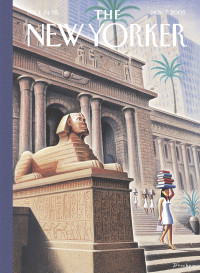
“Rail-Splitting,” 7 November 2005: Was Lincoln depressed? Was he a team player?
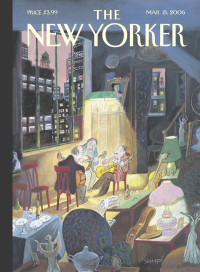
“The Terror Last Time,” 13 March 2006: How much evidence did you need to hang a terrorist in 1887?
“Surveillance Society,” 11 September 2006: In the 1930s, a group of British intellectuals tried to record the texture of everyday life
“Bad Precedent,” 29 January 2007: Andrew Jackson declares martial law
“There She Blew,” 23 July 2007: The history of whaling
“Twilight of the Books,” 24 December 2007: This is your brain on reading
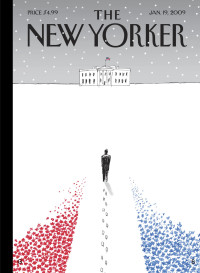
“There Was Blood,” 19 January 2009: A fossil-fueled massacre
“Bootylicious,” 7 September 2009: The economics of piracy
“It Happened One Decade,” 21 September 2009: The books and movies that buoyed America during the Great Depression
“Tea and Antipathy,” 20 December 2010: Was the Tea Party such a good idea the first time around?
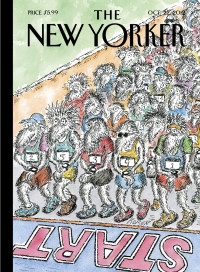
Unfortunate Events, 22 October 2012: What was the War of 1812 even about?
“Four Legs Good,” 28 October 2013: Jack London goes to the dogs
“The Red and the Scarlet,” 30 June 2014: Where the pursuit of experience took Stephen Crane

Visiting Liberty Plaza

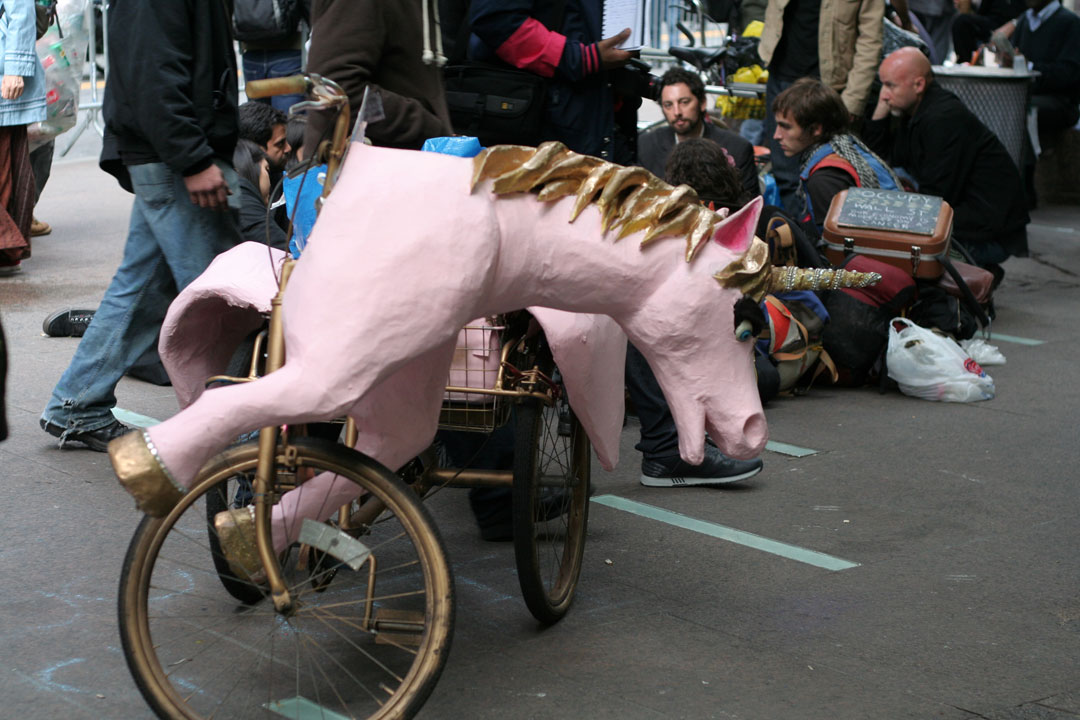
A pink unicorn tricycle, Liberty Plaza, NYC, 4 October 2011

To spend one’s days and nights in a New York City park is expensive. At a minimum, one gives up running hot water, protection from rain and cold, convenient access to a bathroom, and most forms of privacy. I’ve done no more than visit the Occupy Wall Street protests in Zuccotti Park, whose older name of Liberty Plaza the protesters have reclaimed, and I imagine that the ones who actually spend the night there know who each other are. Maybe the willingness to lose safety and comfort are proof, in one another’s eyes, of a level of commitment. Maybe the loss underwrites a trust in one another that makes possible the group’s persistent faith in the ideals of openness and democracy.

During my two visits, I wasn’t wearing my reporter’s cap, and I’m not much of a joiner. That left me the role of tourist. When I visited on Thursday, September 29, haphazard eavesdropping seemed to pick up repeatedly the earnest, necessary, and tedious conversations typical of groups of people trying to decide how to make decisions—conversations that tend to become especially byzantine in groups suspicious of hierarchies. But the openheartedness with which people were giving themselves to these tedious conversations was winning, and the protesters’ physical innovations to group interaction were ingenious and looked fun. Since electric amplification is forbidden in the park, the protesters have adopted what they call “the people’s mike”: at the end of every phrase, a speaker pauses while audience members who were able to hear him repeat the phrase for the benefit of audience members who couldn’t. Lest this practice render listeners too fawningly imitative, audience members all the while talk back to the speaker through a variety of silent, waggling gestures: jazz hands pointing upward signify approval, a pinched forefinger and thumb suggest that the speaker cut his message short, and so on. Watching this new semiotics, I found myself wondering, Why haven’t people been doing this all along? It’s as if it took the Facebook generation to make the most of human presence. People of every description were photographing, filming, and recording. Policemen stood around the periphery, gazing into the crowds, apparently looking for alcohol, which the protesters have forsworn, and tents, which city law forbids. The multiplicity of surveillance triggered a little paranoia in me, and I wondered what sort of databases my visage might be appearing in.

When I visited again today, Tuesday, October 4, the food table looked better stocked, but the sleeping area looked more bedraggled. The photographers, meanwhile, seemed more benign; I watched a young man interview a protester on video, and when she asked, at the end, who he worked for, he explained that the video was just for his Facebook page; he added that he was from Tennessee. Whereas, on my earlier visit, strangers had greeted me and asked what I might be able to contribute, today the people who struck up conversations with me seemed to have more-focused agendas. A woman dressed as Marie Antoinette tried to sign me up for wind-powered electricity. A camera crew for Al Jazeera asked me to pretend to be reading an issue of the protesters’ newspaper, the Occupy Wall Street Journal, for the sake of some B-roll that they were shooting. I actually did want to read it, and the outreach table had given away all its copies, so I pretended. The camera guys were willing to let me keep the prop.

Is this the revolution? I haven’t gone to a march yet, and haven’t yet attended the protesters’ twice-daily town meeting, which they call General Assembly, so I’m hardly in a position to say. Some critics have pointed out that the finance companies once associated with Wall Street are now for the most part headquartered in midtown, but the criticism seems to miss the point: Wall Street, as a location, is a symbol. The location of Occupy Wall Street, on the other hand, is peculiarly literal. The protest is happening in a particular place; online, one may observe it happening, but one can’t virtually participate; it isn’t clear whether the improvised infrastructure could be transferred to another location, let alone seeded to many locations.

Other critics have objected that the protesters don’t seem to know what they want—an objection harder to dismiss. Indeed, the Adbusters poster that launched the movement asked the koan-like question, “What Is Our One Demand?” Similarly, the “Declaration of the Occupation,” which the New York General Assembly adopted unanimously on September 29, lists grievances but proposes no remedies—or rather, no specific remedies; it does exhort people to “create a process to address the problems we face, and generate solutions accessible to everyone.” But details matter in politics; it’s only through negotiation of details that compromises can be reached. Moods—even good moods—pass, and New York City is going to get colder before it gets warmer. Before winter comes, I hope the protesters find a way to disperse their movement without dissipating it.