
I’m going to be AWOL from the Internet for a week or so, and there won’t be any new posts here for a little while.
Month: October 2006
An 18th-century Ellis Island, saved and lost
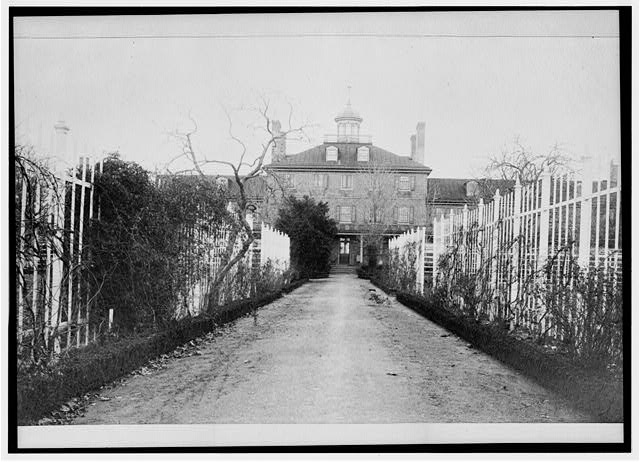
In 2000, a developer bought a 10-acre plot of land on the bank of the Delaware River in Tinicum Township, not far from Philadelphia’s airport, with the intention of paving it into a parking lot. Surviving on the site through a century of benign neglect was a quarantine house known as the Lazaretto, built in the late 1790s for yellow fever patients and used until 1893 as an immigrant processing center—like Ellis Island, but a century older. The Federalist-era building, seen here in a 1936 photograph in the Historic American Buildings Survey (survey number HABS PA-125), still stands, and still looks pretty good in current photographs. In 2001, local preservationists raised a stink about the proposed parking lot, and the Commonwealth of Pennsylvania gave Tinicum Township several million dollars to keep the site intact. This spring, however, it emerged that the township’s preservation plan is to build an enormous fire station/evacuation center on the property. The Lazaretto building won’t be destroyed, but it will be more or less engulfed in the firehouse’s embrace. The National Park Service, among others, protested. The preservationists wanted to turn the site into an Ellis Island-style museum and historic center, but they seem to have run out of time. The township awarded the construction project to a contractor in late August; groundbreaking was scheduled for September 11. I haven’t heard whether the ground has in fact been broken, though.

Throughout the debate over the Lazaretto, tempers have run high and short. The preservationists have raised questions about the town’s choice of how to use the state funds, and have suggested that the evacuation center is a boondoggle (i.e., that its real purpose is as a moneymaking banquet hall/conference center) and that breaking ground will unearth pathogens from yellow fever victims buried there. The town’s manager resigned mid-summer, though it’s not clear that he resigned over this issue. One of the town’s commissioners, however, did issue a statement in July defending the firehouse plan from meddling outsiders. Tinicum’s officials seem to feel that they’re being punished now for their good deed four years ago of saving the site from becoming a parking lot, and they suggest that if they hadn’t alerted the preservationists early on, they could have built their firehouse unimpeded. To judge from the comments on the preservationists’ website, there are some local residents who agree, and others who are upset that a historic site is being rendered inaccessible to the public so soon after it was rediscovered.
Shock of white
I read Elizabeth Bowen’s The Heat of the Day this past week, about which I can’t make up my mind. I was riveted, but there’s something odd and off-kilter about it, as if one were watching a filmed tour of a house and began to suspect that the cinematographer had faked every room, omitting and rearranging by means of camera angles and montage, leaving the viewer with the strong hunch that the real house had a layout completely different from the one the film had seemed to describe.
But that’s not what I’m blogging about, here. What I couldn’t resist was the heroine’s hair, which jumped out at me as Susan Sontag-ian avant la lettre. I did a quick Google search and discovered that the similarity has been remarked upon before. Scholar Neil Corcoran mentioned it, in passing, in a monograph on Bowen, only to have a critic named Sarah Savitt sternly take him to task in the pages of The Cambridge Quarterly for having made such a gratuitous, irrelevant observation. My sympathies are with Corcoran, I’m afraid. How could one read this and not think of Sontag?
She was young-looking—most because of the impression she gave of still being on happy sensuous terms with life. Nature had kindly given her one white dash, lock or wing in otherwise tawny hair; and that white wing, springing back from her forehead, looked in the desired sense artificial—other women asked her where she had had it done; she had become accustomed to being glanced at. That, but only that, about her was striking: her looks, after the initial glance, could grow on you; if you continued to know her, could seem even more to be growing for you. Her clothes fitted her body, her body her self, with a general air of attractiveness and ease.
“In the desired sense artificial”: I hear a Harold Bloom-ian wrestling of precursor versus epigone here. It’s as if Sontag herself had written the words.
Here is (and there went) New York
On Tuesday, October 17, at 7pm, I’m going to be one of three people reading essays about New York City, past and present, at the Educational Alliance, 197 East Broadway. The other readers are Brandon Stosuy and Melissa Plaut. It’s free.
À l’ombre d’un jeune traducteur en fleur
On the heels on the movie trailer promoting his translation of Grégoire Bouillier’s The Mystery Guest, editor-translator Lorin Stein is releasing an annotated, disassembled version of the book in the form of a blog. There are ten pages so far. You’ll have to take a look for yourself to understand the genre. It’s sort of half explication de texte, half apologia pro vita sua. My favorite moment so far is the photocopy of the first few pages of Michel Leiris’s autobiography Manhood with the sentences underlined that reveal similarities between the 15-year-old Stein and the 34-year-old Leiris.