On Not Being Found

Two nearly identical side-by-side sepia-toned photographs of children playing hide-and-seek in a Victorian bedroom

In a new book, The Long Run: A Creative Inquiry, Stacey D’Erasmo asks half a dozen artists, “How do we keep doing this—making art?” I read it avidly, devouring D’Erasmo’s profiles of a painter, a composer, a garden designer, and others, especially enjoying the “fugitive, occasional memoir” (her words) that her disclosures about herself add up to. I did have a hiccup, however: I had to set the book down for a few hours in order to talk myself out of the expectation that either D’Erasmo or one of her interview subjects would answer the question as it applied to my own case. Selfishly and rather naively, I realized, I had been hoping that she or they would.

Alas, no one but me can—which doesn’t stop me from continuing to try to get other people to. In the gift shop of the Edward Gorey House on Cape Cod, last month, I bought Mark Dery’s biography of Gorey and read it straight through, in that untroubled way that one reads when one finds a book that happens to be running parallel with one’s preoccupations at the moment. How did Gorey keep going? His special power seems to have been an ability to distill everything he loved into a distinctive sensibility—and then persevere in that sensibility all his life. In retrospect, the Gorey formula seems clear—William Roughhead + Edward Lear + Ronald Firbank, rendered graphically—and seems super gay, but it wasn’t clear that the elements belonged together before he put them together, and the homosexuality of it all (which comes with this asterisk: though Gorey’s crushes were all on men, as a practical matter he seems to have been ace) didn’t become transparent until later. The stubbornness is what I came away from his biography most admiring—the reserves of patience that enabled him to draw the many delicate, etching-like hash marks that texture the wallpapers of his dark rooms, and to keep drawing these hash marks in small-press book after small-press book, for decades, until at last America decided they were awesome.

That “at last” doesn’t arrive in time for everyone. In most of D’Erasmo’s case studies, however—since she has chosen artists who made it into old age, some selection bias may be at work here—there’s a windfall at some point, an unexpected, not-to-be-relied-upon intersection of popular taste with the genius of the artist in question. In Gorey’s case, he got lucky with his set design for a 1970s production of a play about Dracula, which brought him money, and then with his animated title-credit sequence for the PBS show Mystery, which brought him fame. I want to say that money and fame, when they came, altered him not at all, that he kept on going exactly as he had before, and in many ways this is true, but Dery reveals that Gorey’s focus did change, after Dracula. The experience revived his love of creating and staging plays, and in later life, he devoted more and more of himself to them, the more absurdist the better. The plays weren’t what America wanted from him at that point—having discovered the droll little illustrated books, America wanted more of those—which dissuaded him not at all. Were the plays the best use of his genius? Maybe not, but it was his life. What stayed consistent, in other words, was not his art, but the stubbornness with which he kept executing it.

I can do stubbornness, too, I’m pretty sure. And I can definitely do drift in kind of art. I’m supposed to be writing a third novel, and maybe someday I will, but lately I only seem able to finish poems and short stories.

In a chapter that profiles country musician Steve Earle, D’Erasmo quotes the psychoanalyst D. W. Winnicott:

In the artist of all kinds, I think one can detect an inherent dilemma, which belongs to the co-existence of two trends, the urgent need to communicate and the still more urgent need not to be found. This might account for the fact that we cannot conceive of an artist’s coming to the end of the task that occupies his whole nature.

In the same essay, Winnicott tells the story of a patient whose private journal was read by her mother when she was nine. On the first page of the journal, the girl had written, “What a man thinketh in his heart, so is he.” Her mother asked her where she got the quote, revealing she had read the journal, which upset the patient. But the patient believed she wouldn’t have been upset if her mother had read her journal without revealing she had read it. This, Winnicott comments, “is a sophisticated game of hide-and-seek in which it is a joy to be hidden but disaster not to be found.”

The two moments in Winnicott’s essay seem to get at something profound about the creative impulse. And the two moments, it should be noted, contradict each other. Does the artist urgently need not to be found, or would it be a disaster not to be found? Yes, seems to be the answer. D’Erasmo brings in Winnicott in order to throw light on the anxiety that she feels has driven her own writing, an anxiety to report on “an interior world that has often felt as if it was burning down.” Anxiety in the sense of both wanting to share and feeling no one should see.

The girl’s quote comes from the Book of Proverbs, by the way—from a chapter in the most public and available book in the Western world. On the other hand, the import of the quote seems to be that the higher truth about a person is in her secrets. At the start of his essay, Winnicott writes that he surprised himself, in the writing of it, by “staking a claim . . . to the right not to communicate.” He concludes that “the individual person knows that [her core self] must never be communicated with or be influenced by external reality.”

What does this have to do with going on as an artist? One of the things artists must do is let themselves be made use of, which is somewhat endangering. To let oneself be published is to let oneself be made use of. The other day, a newcomer to my gym asked what I did for a living, and when I said I was a writer, he said, “So I can google you and find out all about you?” and it brought home to me how strange it is that for the sake of my career I’ve agreed to be exposed.

There are other, more-mixed forms of use. Gorey let his illustrations appear on the front of other people’s books, while he was a designer of paperbacks at Anchor, and onstage in other people’s plays. He didn’t have much to do with the creation of the Mystery animations, Dery reveals, apart from granting the producer of the sequences the right to combine and put into motion his illustrations. How can you let yourself be made use of while continuing to protect the core of you that must never be communicated? That, I think, is the hard part. Making money is hard, too, and maybe for the same reason? The paradox of needing to be found and not found may explain the stubbornness and drift in someone like Gorey (or me)—the insistence on not changing and on changing. In order to continue, you have to be able to not continue. Not being found is a tricky game to keep playing.

Training and practice

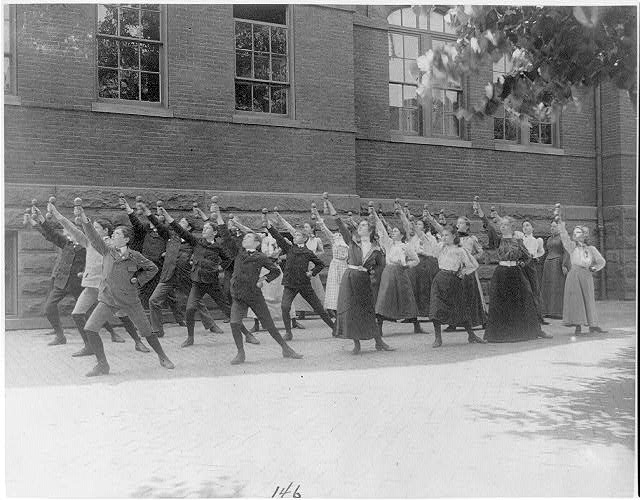
A black-and-white photo of schoolchildren and teachers standing in formation, each holding aloft a small dumbbell

I’ve been going to Cross Fit classes for five years now, and even though I’m deep into my fifties, I have become stronger and have learned a number of skills, outcomes that have surprised me. It’s a remarkably effective system of education and training.

My vocation is writing and not (yet) fitness influencing, however, so my progress in Cross Fit has sometimes led me to daydream about whether a system like it could teach and train writers. This is not a question I have found an answer to! What follows will be exploratory rather than decisive.

In America today, instruction in creative writing usually takes the form of a workshop, which isn’t completely unlike Cross Fit. Both a Cross Fit class and a writing workshop leverage the power of the in-person group. When people come together with the aim of getting better at a particular endeavor, their will power as individuals is strengthened by two social forces: solidarity and rivalry. Being in the presence of people who share your ambition gives that ambition a social reality, by showing you others who are also making a commitment to it, and the encouragement of these peers, in the form of admiration and expressions of confidence in you, can provide positive reinforcement. Humans in company inevitably compare themselves with one another, which risks sparking unpleasant feelings but if properly regulated can be a further motivation for learning and effort. I probably wouldn’t do my allotted burpees quite as fast if I weren’t hoping not to be the last person in class to finish them (as I often am, still). Similarly, in the setting of a writing workshop, I’m probably spurred by a wish to impress, or at least not disappoint, my colleagues. Getting the balance right between solidarity and rivalry is tricky. Much depends on the charisma and emotional intelligence of the group’s leader, whether coach or teacher, and perhaps as much on the social rules, implicit and explicit, that order the interactions between participants.

In a group setting, most instruction comes from the coach or teacher but not all of it. Participants also sometimes instruct one another. This can happen indirectly, as when you watch a peer respond to a teacher’s advice on how to overcome a flaw in technique, or directly, as when a peer gives you a suggestion about how to improve. There’s a risk that the peer might not know what he’s talking about, but this risk is reduced if the coach or teacher eavesdrops and intervenes when necessary. And the act of offering advice is itself instructive, because it is an opportunity for the person giving the advice to consolidate his understanding of technique.

So much for commonalities. Now for some distinctions. I should say up front that I have far less experience with workshops than most writers. I took part in a few as an undergraduate, and over the past half-dozen years, I’ve taken part in one with a few friends, all of whom are professional writers. But I’ve never attended or taught at an MFA program. Take what I say with a grain of salt, therefore.

One limitation of a writing workshop is that its focus is almost exclusively what you might call “demand-side.” I’m using the term metaphorically. In economics, a “demand-side” solution to a problem focuses on consumers, perhaps by proposing to boost their spending power, whereas a “supply-side” solution focuses on producers, perhaps by suggesting that burdens on them like regulation or taxation be lowered. When I say that a workshop has a “demand-side” focus, what I mean is that the attention of a workshop is mostly focused on the way writing is received. This focus is largely built in to the rule that structures most workshops: one participant listens silently while peers who have read a piece of her work describe their reactions.

Writing is not words on a page. It is a series of impressions and thoughts conveyed by words on a page—in part by their texture and rhythm, and in part by their semantic content. A workshop is excellent as a test of whether impressions and thoughts are arriving in a reader’s mind as intended. Do your readers suspect that the butler did it in the first half of your story, or can they tell from the get-go that it was the heiress and resent you for taking so long to say so? Does your description of a rural landscape stir up uneasy feelings of insecurity in childhood, or are you the only person who feels that way about distant slopes of yellow and green? If people in your workshop are skilled at describing their responses to a text, and feel comfortable being honest about their responses, the feedback can be invaluable.

It’s not clear to me, however, that a workshop can provide much more than this. A reader who can tell you that something is wrong is not necessarily a reader who can tell you how to fix it. The premise of a workshop is that its participants arrive already equipped with enough strength and skill. But can you ever have enough of those? It’s easy to see how access to attentive readers could help a writer fine-tune a piece of writing. But it isn’t clear that feedback from readers will build up a writer’s skills. On the contrary, if a writer doesn’t have a resilient enough ego, feedback might impair his fluency, one of the skills a writer needs, by making him self-conscious about exposure.

My daydream about a Cross Fit for writing is that it might be possible to design a kind of instruction that is “supply-side”—that focuses on improving the skills that go into good writing.

A couple of objections immediately present themselves. The first, and perhaps most obvious, is that there are established, agreed-upon conventions for success in Cross Fit, and there are none in writing. There is little to no ambiguity about what is good form in, say, a power snatch. But tastes differ in the arts, and even if you argue that a community of informed, well-read taste-makers will tend to converge in their opinion of which writers are the best, you will have a great deal of trouble articulating the aesthetic rules behind their judgments, and you will never be able to derive rules as practical and concrete as those that allow coaches to correct athletes on the spot.

Second, can writers train and practice, in the sense that athletes can? The understanding in Cross Fit is that athletic performance depends on a number of different skills. Some of these, such as stamina and strength, improve with training, that is, by choosing goals that are more and more challenging (in Cross Fit, this usually means heavier and heavier weights), which cause the body to adapt by becoming stronger than before. Other skills, such as agility and balance, improve by practice; during structured repetitions, the brain and nerves learn, becoming better able to perform particular tasks and improving their general coordination of the different parts of the body. Two of the skills behind athletic performance, power and speed, improve only with both training and practice.

What are the components of skill in writing, and can they be improved by training (more challenging goals) and/or practice (structured repetitions) in a group setting? Some candidate skills: memory, insight, observation, tact, theory of mind, openness, stubbornness, precision, surprise, fluency, control of tone, grammatical resourcefulness, ear (including rhythm and sonority), diction (including vocabulary), figuration. This list needs work! I’m so used to focusing on the attributes of good writing that I find it hard to name the skills that good writing relies on. Even if we can come up with a list of these skills, however, we might discover that they are best cultivated by some other kind of effort altogether, neither training nor practice—such as, for example, plain old reading, which, when done right, expands a writer’s vocabulary and broadens her understanding of literature’s possibilities. It also might turn out that it is impossible to come up with a well-formed list. It might be the case that writing is such a whole-psyche endeavor that the list would be tantamount to a description of what it means to be human, which presumably can’t be nailed down, trained for, or practiced (or can it?). Or maybe my list needs to be winnowed, and the more-general traits, like organization and insight, set aside in favor of the traits that have a closer relationship to writing, like ear, grammatical resourcefulness, and diction.

A third, perhaps related objection: What if writing is intrinsically unlike athletic performance? An athlete, after all, competes in public in real time, whereas a writer usually works in solitude, and presents her achievement to others long after she has finished “performing” it. Athletes don’t get to revise their performance; writers don’t have to show their first drafts. Athletes are constrained by rules—their competition is given meaning by rules, and is felt to be undermined when they are not enforced—whereas there is virtually no rule of writing that some great writer has not broken.

Still, originating sentences, even in private, does require something like athletic skill. You can’t convincingly use a word or a sentence structure that you haven’t made yours, that hasn’t become a part of your voice. No amount of fiddling after the fact can take the place of a missing insight. As I’ve grown older, I’ve grown more and more aware of how physical writing is—how much depends on being in good health, well rested and well fed. The secret weapon of most successful writers is probably hidden long hours, but there is an element of fitness, too. It may take you a thousand tries to write a sentence perfectly, but you do have to write it perfectly that one time. If it turns out that agility in writing can’t be taught, I don’t think it will be because that agility can only exist when the writer is alone. Improving a skill seems likely to help a writer, even if some paragons of the art, following its mysterious vicissitudes, decide to make the experiment of dispensing with the skill in question. I admit, though, that writing created during an exercise in a group setting probably won’t be of enduring value; it will be what in Cross Fit goes by the name of “assistance work.” Privacy and silence probably are necessary, in the end, for magic to happen.

Sardines

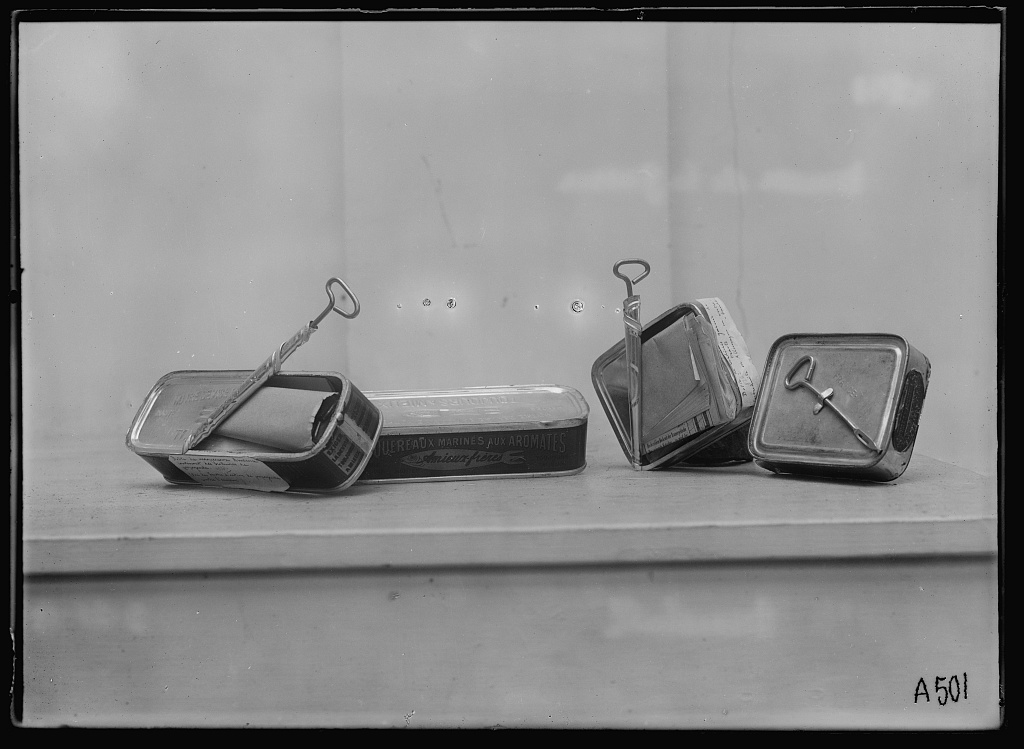
A black-and-white photograph of partially wound-open sardine tins, containing folded sheets of paper

My husband thinks his phone recently overheard us talking about sardines, because sardines started to be advertised to him in his Instagram feed. Sardines have been on my mind for a while. They are not unrelated to my Cross Fit journey. In the first few months of that journey, I made great progress in strength but then plateaued, at a very modest level, and it wasn’t until year two or three that I realized that Jack London was right about protein, actually, and I needed to eat more of it. If you’re bro-ing out, you’re supposed to eat 0.7 to 1.0 grams of protein a day per pound of your desired body weight. In general, also, you’re supposed to eat more protein if you’re older, which I am. (“You’re 57?” said my new favorite young person at the gym the other day. “You’re not giving 57.”) For me this math worked out to about three times as much protein as I, a spindly pescatarian, had previously been eating.

I rejiggered my meals. Whey protein in the form of shakes made a contribution, and Bob’s Red Mill helped by inventing something called Protein Oats, but these additions were far from enough. It turns out that, child of the 1970s though I am, I don’t care for cottage cheese; there is no romance in it for me. Peanut butter, alas, is not the friend that we were all raised to think that it was.

If you eat on autopilot, then on any given day, you are likely to run out of ability to keep eating long before you have eaten enough protein. You are no longer hungry, it is 10:30pm, and you face a bowl of cottage cheese, flavorless and slightly gritty. You can solve the problem by eating a pint of ice cream instead, and I did that for a while, but then your sixpack becomes obscured by what the French call a pneu and what in Edwardian English used to be called a corporation. (“At one window stood a gentleman with a large corporation and an embroidered cap, surrounded by a whole company of political friends who waited respectfully and in silence.” —Eça de Queiroz, The Maias.) In an attempt to systematically avoid these fates, I invented a variable I called “protein density,” which I defined as calories divided by grams of protein. (“Density” is the wrong word, sorry. It’s actually the opposite of density: the lower the “protein density,” the denser the food is in protein. Think of the number as the denominator, if that helps. It will make more sense when I give examples a sentence or two further on.) In order for me to get enough protein without overeating, the protein density of everything I eat in a day has to tally up to 16 (or less). That is, I have to eat no more than 16 times as many calories as grams of protein. Food with a protein density below 16 is helping me get there; food with a protein density above 16 is holding me back.

Some examples: tuna (4.7), whey protein (5), nonfat yogurt (5.6), cottage cheese (6.2), sardines (8.5), nonfat milk (10), salmon (10.3), egg (12), feta (14), butter beans (15), 2% milk (15.2), Protein Oats (19), chickpeas (20), light sour cream (20), peanut butter (23.75), farro (26.7), almonds (28.3), almond milk (30), regular oatmeal (36), half and half (43.8), rice (53), Van Leeuwen ice cream (63), pecans (70).

I had no idea about pecans. That was a sad moment.

One of my favorite Frank O’Hara poems is “Why I Am Not a Painter,” which is about visiting a friend at work on a painting, in which the label on a tin of sardines is legible in an early stage but the letters have mostly dissolved by the time the painting is complete (and compare the more-representational watercolor/collage by another friend of O’Hara’s, Joe Brainard). O’Hara jokes that he writes the same way, starting a poem with the idea of the color orange, but as he works, deciding there should be more in his poem, “not of orange,” however, but “of / words, of how terrible orange is / and life.” In the end O’Hara never even gets around to mentioning orange in his poem; his painter-friend, meanwhile, titles his canvas after the sardines that are no longer in it. The poem might be an allegory of how to write about homosexuality in the 1950s? And also the general, salutary indirection of art.

Notice that I am leaving the sardines in.

If you look at the list of protein density above, and you are basic like me, you think: just eat lots of tuna. Who doesn’t like an apex predator? They have the tastiest flesh. Unfortunately, we live in a fallen world, in which heavy metals such as mercury aggregate in that flesh, because it is the final resting place of all the mercury in all the subsidiary fishes eaten by the fishes that the apex predator has eaten. Also, eating apex predators, even farmed ones, isn’t great for the fish populations of the world, as I understand it. In terms of not poisoning yourself, and in terms of harvesting at an ecological stratum that is easier for the natural world to replenish, it’s better to eat from near the bottom of the fish food chain.

And so I found myself at the lonely end of the canned goods aisle at the grocery store. Logic had brought me there, not love. The good news is that these days some of the tins have beautiful packaging—colorful, spritely, clever. The bad news is that inside there are glistening fishy-smelling fish that in most cases still have their skins and their spines, though not, thank God, even in the most authentic presentations, their heads or guts. Years ago I read that food aversions can be easily hacked. “Researchers have found that eating moderate amounts of a novel or hated food at moderate intervals is nearly guaranteed to work,” Jeffrey Steingarten wrote in Slate in 1996. So I bought an armful. I went easy on myself at first; I let myself start with the skinless, spineless ones, however weak-willed this might have been.

I dressed them up, too. I sliced and pickled onions; I mashed avocado; I spread mustard on crackers. I have a friend who swears by horseradish. I was fooled by none of these disguises. I found it easier just to eat the little fishes plain.

I have been eating them for almost a year now. I open a tin as a side, at lunch, if the leftovers in my lunchbox don’t contain enough protein. Do I like them yet? Well, I don’t mind them any more, and I like it that I’m getting enough protein to be able to improve on a PR every few months by a modest increment. For a while, the Fishwife company was selling a special pair of tongs to eat sardines with. This seemed like a good idea, since I have a tremor, and a trembling sardine on the prongs of a fork is hazardous to the well-being of the book you’re trying to read at lunchtime, so I bought a pair. Or rather, I bought a smaller version of the pair, made by a company named Gestura, which manufactured the tongs for Fishwife, currently out of stock but if they come back in, I recommend. Very neatly now I am able to splay open the two halves of a sardine and pry out its spine, which I deposit on a plate beside the tin, where it reminds me of one of the little skeletons that a cartoon cat draws out from its mouth after it has slurped the meat off a cartoon fish. (Some people maybe just crunch the spines up and eat them? Shudder.) Sardines with skin and spine turn out to be more tender and subtle than sardines without, of course, and sardines that cost $9 a tin are usually more tender and subtle than those that cost $2. For the record, in a year of washing out the empty tins for recycling, I have not yet cut myself.

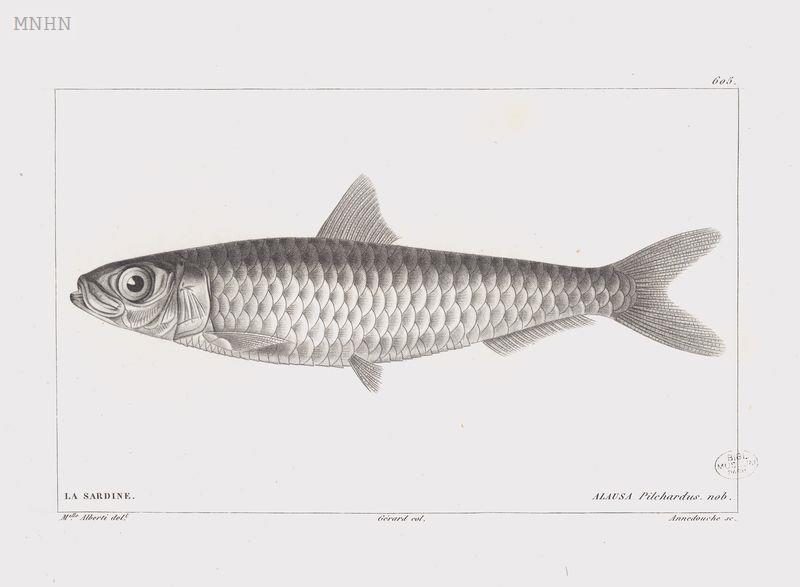
A delicately colored lithograph of a single googly-eyed sardine

Editor’s note, Dec. 23: We are hearing from informed sources that in fact many people chomp down their sardines spines and all.

Antecedents of garmonbozia

Within the story, Jack’s problem, which becomes the reader’s, and must have been to some extent the writer’s, too, is that Roy has a theory, and the theory is just too much.

For the Redux newsletter of the Paris Review, I ask whether the demons of David Lynch’s Twin Peaks universe were inspired by a 1982 short story by Norman Rush. Click here to read! And click here to sign up for the Paris Review’s Redux newsletter!