Training and practice

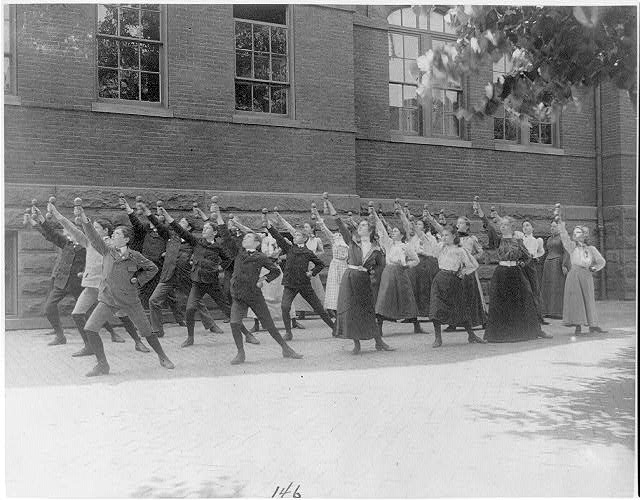
A black-and-white photo of schoolchildren and teachers standing in formation, each holding aloft a small dumbbell

I’ve been going to Cross Fit classes for five years now, and even though I’m deep into my fifties, I have become stronger and have learned a number of skills, outcomes that have surprised me. It’s a remarkably effective system of education and training.

My vocation is writing and not (yet) fitness influencing, however, so my progress in Cross Fit has sometimes led me to daydream about whether a system like it could teach and train writers. This is not a question I have found an answer to! What follows will be exploratory rather than decisive.

In America today, instruction in creative writing usually takes the form of a workshop, which isn’t completely unlike Cross Fit. Both a Cross Fit class and a writing workshop leverage the power of the in-person group. When people come together with the aim of getting better at a particular endeavor, their will power as individuals is strengthened by two social forces: solidarity and rivalry. Being in the presence of people who share your ambition gives that ambition a social reality, by showing you others who are also making a commitment to it, and the encouragement of these peers, in the form of admiration and expressions of confidence in you, can provide positive reinforcement. Humans in company inevitably compare themselves with one another, which risks sparking unpleasant feelings but if properly regulated can be a further motivation for learning and effort. I probably wouldn’t do my allotted burpees quite as fast if I weren’t hoping not to be the last person in class to finish them (as I often am, still). Similarly, in the setting of a writing workshop, I’m probably spurred by a wish to impress, or at least not disappoint, my colleagues. Getting the balance right between solidarity and rivalry is tricky. Much depends on the charisma and emotional intelligence of the group’s leader, whether coach or teacher, and perhaps as much on the social rules, implicit and explicit, that order the interactions between participants.

In a group setting, most instruction comes from the coach or teacher but not all of it. Participants also sometimes instruct one another. This can happen indirectly, as when you watch a peer respond to a teacher’s advice on how to overcome a flaw in technique, or directly, as when a peer gives you a suggestion about how to improve. There’s a risk that the peer might not know what he’s talking about, but this risk is reduced if the coach or teacher eavesdrops and intervenes when necessary. And the act of offering advice is itself instructive, because it is an opportunity for the person giving the advice to consolidate his understanding of technique.

So much for commonalities. Now for some distinctions. I should say up front that I have far less experience with workshops than most writers. I took part in a few as an undergraduate, and over the past half-dozen years, I’ve taken part in one with a few friends, all of whom are professional writers. But I’ve never attended or taught at an MFA program. Take what I say with a grain of salt, therefore.

One limitation of a writing workshop is that its focus is almost exclusively what you might call “demand-side.” I’m using the term metaphorically. In economics, a “demand-side” solution to a problem focuses on consumers, perhaps by proposing to boost their spending power, whereas a “supply-side” solution focuses on producers, perhaps by suggesting that burdens on them like regulation or taxation be lowered. When I say that a workshop has a “demand-side” focus, what I mean is that the attention of a workshop is mostly focused on the way writing is received. This focus is largely built in to the rule that structures most workshops: one participant listens silently while peers who have read a piece of her work describe their reactions.

Writing is not words on a page. It is a series of impressions and thoughts conveyed by words on a page—in part by their texture and rhythm, and in part by their semantic content. A workshop is excellent as a test of whether impressions and thoughts are arriving in a reader’s mind as intended. Do your readers suspect that the butler did it in the first half of your story, or can they tell from the get-go that it was the heiress and resent you for taking so long to say so? Does your description of a rural landscape stir up uneasy feelings of insecurity in childhood, or are you the only person who feels that way about distant slopes of yellow and green? If people in your workshop are skilled at describing their responses to a text, and feel comfortable being honest about their responses, the feedback can be invaluable.

It’s not clear to me, however, that a workshop can provide much more than this. A reader who can tell you that something is wrong is not necessarily a reader who can tell you how to fix it. The premise of a workshop is that its participants arrive already equipped with enough strength and skill. But can you ever have enough of those? It’s easy to see how access to attentive readers could help a writer fine-tune a piece of writing. But it isn’t clear that feedback from readers will build up a writer’s skills. On the contrary, if a writer doesn’t have a resilient enough ego, feedback might impair his fluency, one of the skills a writer needs, by making him self-conscious about exposure.

My daydream about a Cross Fit for writing is that it might be possible to design a kind of instruction that is “supply-side”—that focuses on improving the skills that go into good writing.

A couple of objections immediately present themselves. The first, and perhaps most obvious, is that there are established, agreed-upon conventions for success in Cross Fit, and there are none in writing. There is little to no ambiguity about what is good form in, say, a power snatch. But tastes differ in the arts, and even if you argue that a community of informed, well-read taste-makers will tend to converge in their opinion of which writers are the best, you will have a great deal of trouble articulating the aesthetic rules behind their judgments, and you will never be able to derive rules as practical and concrete as those that allow coaches to correct athletes on the spot.

Second, can writers train and practice, in the sense that athletes can? The understanding in Cross Fit is that athletic performance depends on a number of different skills. Some of these, such as stamina and strength, improve with training, that is, by choosing goals that are more and more challenging (in Cross Fit, this usually means heavier and heavier weights), which cause the body to adapt by becoming stronger than before. Other skills, such as agility and balance, improve by practice; during structured repetitions, the brain and nerves learn, becoming better able to perform particular tasks and improving their general coordination of the different parts of the body. Two of the skills behind athletic performance, power and speed, improve only with both training and practice.

What are the components of skill in writing, and can they be improved by training (more challenging goals) and/or practice (structured repetitions) in a group setting? Some candidate skills: memory, insight, observation, tact, theory of mind, openness, stubbornness, precision, surprise, fluency, control of tone, grammatical resourcefulness, ear (including rhythm and sonority), diction (including vocabulary), figuration. This list needs work! I’m so used to focusing on the attributes of good writing that I find it hard to name the skills that good writing relies on. Even if we can come up with a list of these skills, however, we might discover that they are best cultivated by some other kind of effort altogether, neither training nor practice—such as, for example, plain old reading, which, when done right, expands a writer’s vocabulary and broadens her understanding of literature’s possibilities. It also might turn out that it is impossible to come up with a well-formed list. It might be the case that writing is such a whole-psyche endeavor that the list would be tantamount to a description of what it means to be human, which presumably can’t be nailed down, trained for, or practiced (or can it?). Or maybe my list needs to be winnowed, and the more-general traits, like organization and insight, set aside in favor of the traits that have a closer relationship to writing, like ear, grammatical resourcefulness, and diction.

A third, perhaps related objection: What if writing is intrinsically unlike athletic performance? An athlete, after all, competes in public in real time, whereas a writer usually works in solitude, and presents her achievement to others long after she has finished “performing” it. Athletes don’t get to revise their performance; writers don’t have to show their first drafts. Athletes are constrained by rules—their competition is given meaning by rules, and is felt to be undermined when they are not enforced—whereas there is virtually no rule of writing that some great writer has not broken.

Still, originating sentences, even in private, does require something like athletic skill. You can’t convincingly use a word or a sentence structure that you haven’t made yours, that hasn’t become a part of your voice. No amount of fiddling after the fact can take the place of a missing insight. As I’ve grown older, I’ve grown more and more aware of how physical writing is—how much depends on being in good health, well rested and well fed. The secret weapon of most successful writers is probably hidden long hours, but there is an element of fitness, too. It may take you a thousand tries to write a sentence perfectly, but you do have to write it perfectly that one time. If it turns out that agility in writing can’t be taught, I don’t think it will be because that agility can only exist when the writer is alone. Improving a skill seems likely to help a writer, even if some paragons of the art, following its mysterious vicissitudes, decide to make the experiment of dispensing with the skill in question. I admit, though, that writing created during an exercise in a group setting probably won’t be of enduring value; it will be what in Cross Fit goes by the name of “assistance work.” Privacy and silence probably are necessary, in the end, for magic to happen.
Sardines

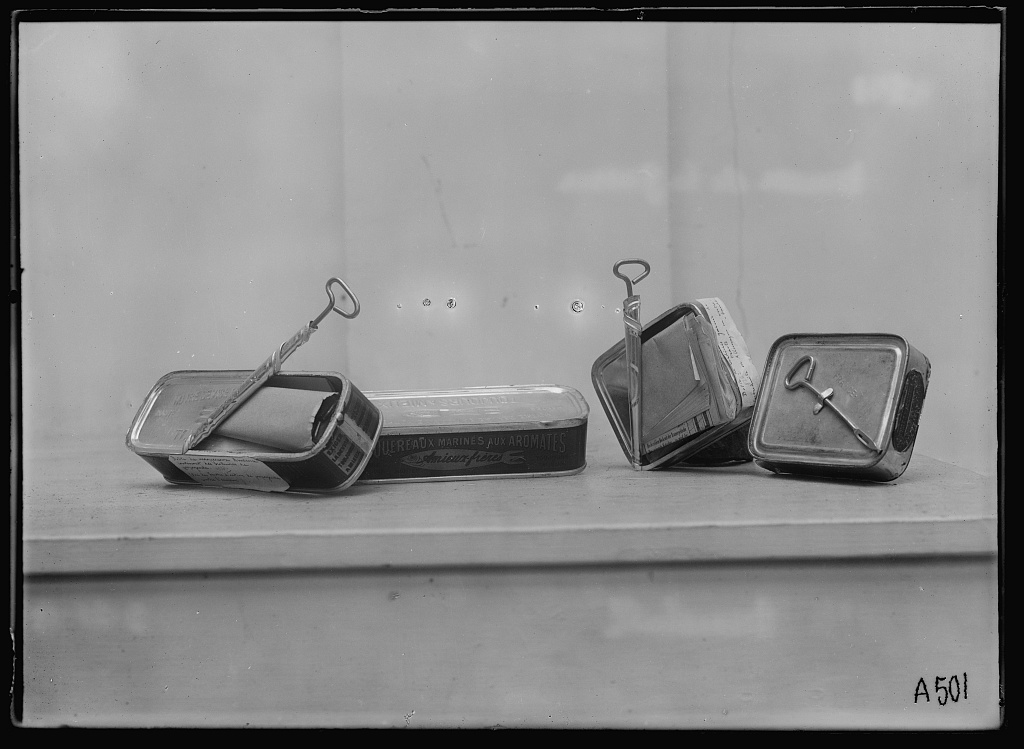
A black-and-white photograph of partially wound-open sardine tins, containing folded sheets of paper

My husband thinks his phone recently overheard us talking about sardines, because sardines started to be advertised to him in his Instagram feed. Sardines have been on my mind for a while. They are not unrelated to my Cross Fit journey. In the first few months of that journey, I made great progress in strength but then plateaued, at a very modest level, and it wasn’t until year two or three that I realized that Jack London was right about protein, actually, and I needed to eat more of it. If you’re bro-ing out, you’re supposed to eat 0.7 to 1.0 grams of protein a day per pound of your desired body weight. In general, also, you’re supposed to eat more protein if you’re older, which I am. (“You’re 57?” said my new favorite young person at the gym the other day. “You’re not giving 57.”) For me this math worked out to about three times as much protein as I, a spindly pescatarian, had previously been eating.

I rejiggered my meals. Whey protein in the form of shakes made a contribution, and Bob’s Red Mill helped by inventing something called Protein Oats, but these additions were far from enough. It turns out that, child of the 1970s though I am, I don’t care for cottage cheese; there is no romance in it for me. Peanut butter, alas, is not the friend that we were all raised to think that it was.

If you eat on autopilot, then on any given day, you are likely to run out of ability to keep eating long before you have eaten enough protein. You are no longer hungry, it is 10:30pm, and you face a bowl of cottage cheese, flavorless and slightly gritty. You can solve the problem by eating a pint of ice cream instead, and I did that for a while, but then your sixpack becomes obscured by what the French call a pneu and what in Edwardian English used to be called a corporation. (“At one window stood a gentleman with a large corporation and an embroidered cap, surrounded by a whole company of political friends who waited respectfully and in silence.” —Eça de Queiroz, The Maias.) In an attempt to systematically avoid these fates, I invented a variable I called “protein density,” which I defined as calories divided by grams of protein. (“Density” is the wrong word, sorry. It’s actually the opposite of density: the lower the “protein density,” the denser the food is in protein. Think of the number as the denominator, if that helps. It will make more sense when I give examples a sentence or two further on.) In order for me to get enough protein without overeating, the protein density of everything I eat in a day has to tally up to 16 (or less). That is, I have to eat no more than 16 times as many calories as grams of protein. Food with a protein density below 16 is helping me get there; food with a protein density above 16 is holding me back.

Some examples: tuna (4.7), whey protein (5), nonfat yogurt (5.6), cottage cheese (6.2), sardines (8.5), nonfat milk (10), salmon (10.3), egg (12), feta (14), butter beans (15), 2% milk (15.2), Protein Oats (19), chickpeas (20), light sour cream (20), peanut butter (23.75), farro (26.7), almonds (28.3), almond milk (30), regular oatmeal (36), half and half (43.8), rice (53), Van Leeuwen ice cream (63), pecans (70).

I had no idea about pecans. That was a sad moment.

One of my favorite Frank O’Hara poems is “Why I Am Not a Painter,” which is about visiting a friend at work on a painting, in which the label on a tin of sardines is legible in an early stage but the letters have mostly dissolved by the time the painting is complete (and compare the more-representational watercolor/collage by another friend of O’Hara’s, Joe Brainard). O’Hara jokes that he writes the same way, starting a poem with the idea of the color orange, but as he works, deciding there should be more in his poem, “not of orange,” however, but “of / words, of how terrible orange is / and life.” In the end O’Hara never even gets around to mentioning orange in his poem; his painter-friend, meanwhile, titles his canvas after the sardines that are no longer in it. The poem might be an allegory of how to write about homosexuality in the 1950s? And also the general, salutary indirection of art.

Notice that I am leaving the sardines in.

If you look at the list of protein density above, and you are basic like me, you think: just eat lots of tuna. Who doesn’t like an apex predator? They have the tastiest flesh. Unfortunately, we live in a fallen world, in which heavy metals such as mercury aggregate in that flesh, because it is the final resting place of all the mercury in all the subsidiary fishes eaten by the fishes that the apex predator has eaten. Also, eating apex predators, even farmed ones, isn’t great for the fish populations of the world, as I understand it. In terms of not poisoning yourself, and in terms of harvesting at an ecological stratum that is easier for the natural world to replenish, it’s better to eat from near the bottom of the fish food chain.

And so I found myself at the lonely end of the canned goods aisle at the grocery store. Logic had brought me there, not love. The good news is that these days some of the tins have beautiful packaging—colorful, spritely, clever. The bad news is that inside there are glistening fishy-smelling fish that in most cases still have their skins and their spines, though not, thank God, even in the most authentic presentations, their heads or guts. Years ago I read that food aversions can be easily hacked. “Researchers have found that eating moderate amounts of a novel or hated food at moderate intervals is nearly guaranteed to work,” Jeffrey Steingarten wrote in Slate in 1996. So I bought an armful. I went easy on myself at first; I let myself start with the skinless, spineless ones, however weak-willed this might have been.

I dressed them up, too. I sliced and pickled onions; I mashed avocado; I spread mustard on crackers. I have a friend who swears by horseradish. I was fooled by none of these disguises. I found it easier just to eat the little fishes plain.

I have been eating them for almost a year now. I open a tin as a side, at lunch, if the leftovers in my lunchbox don’t contain enough protein. Do I like them yet? Well, I don’t mind them any more, and I like it that I’m getting enough protein to be able to improve on a PR every few months by a modest increment. For a while, the Fishwife company was selling a special pair of tongs to eat sardines with. This seemed like a good idea, since I have a tremor, and a trembling sardine on the prongs of a fork is hazardous to the well-being of the book you’re trying to read at lunchtime, so I bought a pair. Or rather, I bought a smaller version of the pair, made by a company named Gestura, which manufactured the tongs for Fishwife, currently out of stock but if they come back in, I recommend. Very neatly now I am able to splay open the two halves of a sardine and pry out its spine, which I deposit on a plate beside the tin, where it reminds me of one of the little skeletons that a cartoon cat draws out from its mouth after it has slurped the meat off a cartoon fish. (Some people maybe just crunch the spines up and eat them? Shudder.) Sardines with skin and spine turn out to be more tender and subtle than sardines without, of course, and sardines that cost $9 a tin are usually more tender and subtle than those that cost $2. For the record, in a year of washing out the empty tins for recycling, I have not yet cut myself.

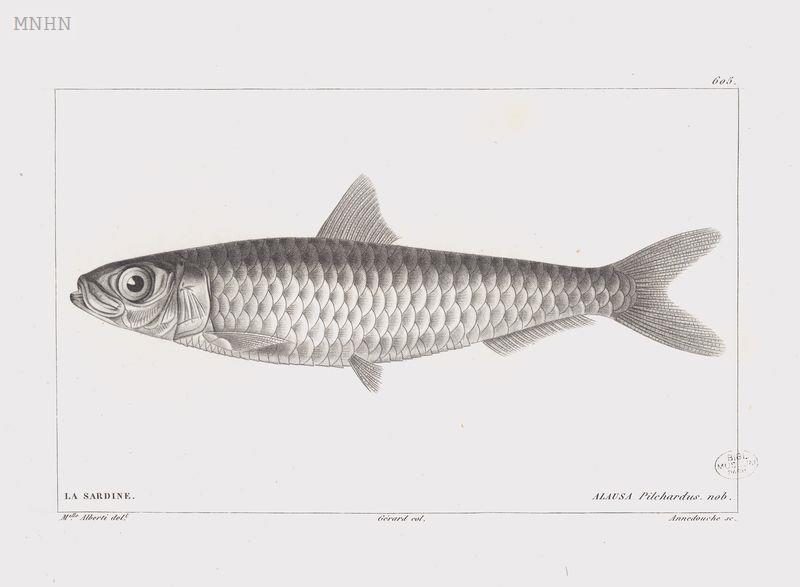
A delicately colored lithograph of a single googly-eyed sardine

Editor’s note, Dec. 23: We are hearing from informed sources that in fact many people chomp down their sardines spines and all.

My new body, three years later

I have a friend who, whenever he eats a vegetable, uploads what he calls a “vegetable accountability post” to social media. I am long overdue for a Cross Fit accountability post. I have been going for three and a half years, and so far I’ve only written about it once, which is fearful reticence.

Three and a half years! Minus about nine months when there was this little pandemic. Still, three and a half years is a long time. Cross Fit, for those of you who haven’t been initiated, is a group gym class with a coach. The program varies daily but usually combines gymnastics, weightlifting, and aerobic training. It’s famously kind of intense. Last Sunday, for example, the aerobic component of the class, known as the workout of the day, or (unfortunately) “WOD,” consisted of 50 double-unders (a double-under is when the jump rope passes under your feet twice per jump), 50 sit-ups, a 130-meter run, 40 double-unders, 40 sit-ups, another 130-meter run, 30 double-unders, 30 sit-ups, another 130-meter run, 20 double-unders, 20 sit-ups, another 130-meter run, and finally 10 double-unders, 10 sit-ups, and one last 130-meter run. All of which followed a weightlifting complex that consisted of sets of a high hang power snatch, a hang power snatch, and an overhead squat.

Okay, yeah, I’m boasting a little by telling you all that. But I’m fifty-five years old! And I’ve been weedy, nerdy, and gay all my life! Even after three-plus years, I find it incredible that I’m doing this. That I can do this. This is not the sort of thing that middle-age Brooklyn novelists do (though, to be honest, it was a Brooklyn novelist, if a considerably younger one, who told me about the particular Cross Fit gym I now go to).

Some accountability, though: injuries. While doing Cross Fit, I have sprained an ankle, while stepping down from a banded pull-up, which put me out of commission for about a month; have pulled something in one of my shoulders, which required me to do rehab exercises and be cautious with the shoulder for about the same length of time but not actually stop going to Cross Fit; and have thrown out my lower back twice. The first time I threw out my back wasn’t technically “in” Cross Fit, but during a Cross Fit–adjacent Zoom stretching class at home during the pandemic. It sent me on a medical odyssey that lasted about seven months, from which I learned that the heathcare system, as currently configured, is happy to charge you money for back pain but has almost no idea how to treat it. Lesson learned: take the money you were going to spend on an orthopedic surgeon, an X-ray, and an MRI (injections and surgery have been shown to be largely useless, by the way, but even I knew that), and spend it instead on a physical therapist who works with athletes. The second back injury did happen in a Cross Fit class, though not at a moment when I was actually lifting anything. I skipped the doctor and went straight to physical therapy, and was only away from Cross Fit for about a month.

This may sound like a lot of injury, compiled in one place like this. But injury is part of any sport, and what’s more, during the same time period, I also dropped a window sash on my right index finger, necessitating four stitches, which kept me out of the gym for a month and a half, and gave myself an acute case of plantar fasciitis by going birding for three and a half hours in ill-fitting hiking boots, which kept me away for three weeks. I’m accident-prone, is the thing, which has nothing to do with Cross Fit. Most Cross Fit classes begin with a “question of the day,” which is usually something like What’s your favorite breakfast food? or What TV show are you watching these days?. But a couple of weeks ago, the question was How many bones have you broken? and it startled me that in a roomful of athletes, everyone but me said one or zero. In my case the answer is at least four, two of them—a finger and a toe—while playing soccer with a bunch of writers and editors. What’s more, I’ve had episodes of lower back pain since graduate school, i.e., for almost thirty years, and the odds are high that I would have had one during the pandemic even if I hadn’t taken that Zoom stretch class.

So those are the minuses. Now for the pluses. When I wrote about Cross Fit in 2020, I said that what I liked most was learning new skills, and that’s still true, and maybe what I’m proudest of. I’ve learned how to do double-unders, for example (at least when I’m well rested and don’t psych myself out). I can do kipping pull-ups, which are pull-ups made a little easier by swinging between an arched-body and a hollow-body position. I can even do kipping handstand push-ups, which look much trickier than they are (though, alas, as far as strict handstand push-ups are concerned, I only seem to have the strength to do about three, so far). If the stars are aligned, I can do a free-standing handstand for all of four and a half seconds. But I never thought I’d be able to do a free-standing handstand at all, let alone that I would learn the skill at age fifty-five! This list should probably be extended to include movements like the back squat that I may have thought I knew how to do four years ago but I can now definitively say I had no real concept of then, given all the cues that I now struggle to keep in mind when I do one (externally rotate knees, tuck rib cage down, tighten core, breathe into stomach, hold breath as if doing the squat in a pool of water that’s at chest height, keep elbows in plane with body, keep lumbar immobile, send butt out, and don’t let knees drift back in).

I titled the post about Cross Fit that I wrote in 2020 “My new body,” but I didn’t actually describe said body. So here goes. At some point, fairly early on, I noticed that my arms, which used to swing as freely backward as forward, were now on the backswing hitting up against this more-or-less new triangular shelf of muscles attached to my back, apparently known as “traps.” Sort of like the overhang of a turtle’s shell. I had never noticed them before. A little later I became fascinated by new facets on the upper outsides of my triceps, where there hadn’t previously been any distinct contours at all. I got very sharp abs for a while, but then I started eating more (even the liberal New York Timesrecommends that athletes eat about three-quarters as many grams of protein daily as they weigh in pounds, which I didn’t realize you were supposed to do until about year two, when I became frustrated that I wasn’t able to break through a plateau; rest assured I’m still a vegetarian, but it was touch-and-go there for a while; my virtue was saved by Bob’s Red Mill whey protein, the cut-fruits section of the Wegmans freezer department, and a new blender), so they’re no longer quite as pronounced. Maybe the weirdest development was that my knees, which have always been of a lunar knobbiness, filled out a little, some of the concavities flipping into convexities. Maybe that’s a slight exaggeration. Well, anyway, I can see that my knees are shaped different now, even if no one else can. In general, I’m not markedly bigger than I was a few years ago, but even to myself I feel more solid. Sometimes I think it’s too bad I didn’t discover Cross Fit when I was a bachelor in my twenties, but then I remind myself that I’m so old that Cross Fit didn’t even exist back then. There are moments when I feel awe at the raw sexual power that is now coursing through my thick new very different body, but then I upload a phone video to Instagram, and see a shaky, wobbly little old man who’s found the gumption to do exercises that look like they’re probably good for him. Oh, well; it’s nice to feel like a twenty-five-year-old hottie again even if to the outside world I no longer look like one. My neck and waist are the same size they ever were, but my calves and thighs are a little larger (I had to throw out my pre-pandemic skinny jeans, which luckily had been declared passé, anyway), and my old dress shirts are now too tight in the shoulders, and since I can’t afford to replace them, I look even more robust than I actually am when I wear one. This transformation is mostly very fun. It was heady in the first six months or so, but the novelty has worn off a little by now, though of course I still like it. And yet, and yet. I am, as I think I’ve said a few times now, fifty-five. The transformation is not going to last. It’s all happening in the shadow of my knowing that it’s not going to last. For now I’m still becoming fitter, but the lateness of my embrace of fitness is to some extent obscuring the underlying reality that my body is in decline. (To some extent: when I did the Memorial Day workout known as “the Murph” yesterday—I’ll let you google it—my time was six minutes slower than last year’s.) Going to Cross Fit, for someone like me, is a little like buying cut flowers. They’re pretty, but you have to buy new ones every few days. And the day will come when you won’t be able to do even that. One of the challenges of (late) middle age is deciding you’re okay with ephemerality. That you want fresh flowers in spite of their ephemerality. Maybe even because of it. I don’t know how long this adventure lasts, or where it goes, if anywhere. That said, my understanding is that strength training makes an even bigger difference in old age than it does in earlier phases of life.

I originally signed up with Cross Fit in hopes of jolting myself out of a depression that seemed to be descending. It worked. Or maybe it was going back into therapy that worked—the evidence is all just anecdotal over here. I’ve known for years that exercise helps me. For a long time, I saw a therapist on the Upper East Side, and I used to bike to the sessions from Brooklyn, which I joked was a way of doubling the therapeutic dose. Back when my chosen exercise was swimming, I used to feel that after my allotted thirty-six laps, I was almost entitled to consider myself a different person, so altered was my body chemistry. Cross Fit is a more intense workout than swimming or biking or anything else has ever been for me; in a group, I seem to be willing to work out much harder than I would ever find the motivation to do on my own, maybe because it harnesses the competitive side of me, which turns out to be pretty salient. The reset of my mood system now feels, correspondingly, close to absolute. Workouts this intense seem to burn through toxins that otherwise accumulate in me, the wishes to punish or reproach or second-guess myself, and at this point I have an almost medieval faith in Cross Fit’s power to ward off depression. Is this how people used to feel about bloodletting? When injury or illness prevents me from going, my primary anxiety isn’t about the injury or illness, whatever it might be, but that without the stimulus of Cross Fit, I could become depressed again. And this could happen, I’m aware; cf. the cut flowers.

Some day maybe I’ll write a post about my life in exercise, à la Alison Bechdel’s The Secret to Superhuman Strength, but for now I just want to say that as a gay man, I’ve always felt most comfortable with exercise that was solitary—running, biking, swimming, solo training on weight machines—which I suspect is a legacy of childhood fear. I think I grew up afraid that if other people saw my body, saw me too openly using it, it might betray me—they would figure out I was gay. I’m not sure the fear was logical even then, let alone now. And it turns out that the exercise I’ve most enjoyed, the exercise that I’ve gotten the most out of, as an adult, has been in groups—first the gaggle of writers and editors my husband and I used to play soccer with, in Prospect Park, for a number of years, and now Cross Fit. It’s odd that it didn’t happen until long after I’d given up hiding who I was—that even after I’d given up hiding, the habit of hiding was still with me. The gym I go to now is Cross Fit South Brooklyn, and I adore it so much I can’t be trusted not to become maudlin, so I won’t say much, other than that the owner and coaches have been kind, thoughtful, patient, cheerful, and generous, and the other members friendly, welcoming, and supportive. “It turns out,” a friend and fellow Cross Fitter joked to me, “that having someone say ‘Good job!’ and give you a fist bump after a workout is incredibly powerful.” It is powerful. The joke almost doesn’t read like a joke when it’s written out like that. It shouldn’t make us nervous to acknowledge how powerful it is. I’m hardly the only person who had a troubled relationship with his own body in childhood and youth, and I’m actually pretty lucky, as far as my body goes, in having so far never had a serious illness, other than depression. But discovering, even late in life, that you can enjoy your body, and that you can push it further than you thought you could, and survive, and even become stronger, is a lot to take in, maybe especially for someone who lived most of his life very much in his head, and as a child took refuge in the illusion that the mind was different from the body. It isn’t, which is very strange. But if you need to hack your mind a little, this turns out to be to your advantage.


Elsewhere

“Birders have been marooned, kidnapped, and raped while in pursuit of birds. One was eaten by a tiger in India but got pictures of it before his demise.” —Jessie Williamson in Outside on Peter Kaestner’s quest to see 10,000 bird species

“The greatest value of the book is not what it tells us about Heidegger, but rather what it shows about the fecklessness and dishonesty of a certain wing of the academic enterprise.” —Alan Jacobs on Richard Wolin’s Heidegger in Ruins

“Something put on your bucket list by your enemy.” —Michael Hofmann in the NYRB on Eckermann’s Conversations with Goethe

“The person at Spotify who gives these new clusters names is Glenn McDonald, the company’s ‘data alchemist’. McDonald has created a website, Every Noise at Once, that maps all of Spotify’s ‘genre-shaped distinctions’—six thousand in total—on a single chart. Scrolling through it is like staring at a galaxy, with McDonald the astronomer responsible for naming each new star. Genres to the left are said to be denser and more atmospheric (cryptic black metal, epic black metal, Greek black metal); those to the right are spikier and bouncier (rave funk, hard minimal techno). Some of the genres listed are purely functional: ‘sleep’, ‘Pilates’, ‘pet calming’. Others are baffling: Spotify distinguishes between ‘small room’, ‘big room’, ‘deep big room’ and ‘escape room’.” —Daniel Cohen in the LRB on Spotify

Plus:

I hope you enjoy this newsletter, but my fiction is the writing I put the most into. Please also check out my new short story, “The Ellipse Maker,” in the latest issue of n+1.

My new body

I see a faraway look come into the eyes of many of you when I offer to talk about my new workout program, but on the internet there are no gatekeepers and you can’t stop me . . .

This is probably not the news you were expecting to hear from a essayist/novelist often pigeonholed as Jamesian, or at least wannabe Jamesian, but a few months ago I joined a Cross Fit box. There, I said it, I called it a “box”; that’s how you can tell I’m one of them now. A “box,” for the record, is a gym where people do Cross Fit, and Cross Fit is a workout program that combines elements of gymnastics, weightlifting, and aerobic training, including short intervals of high intensity. From day to day, the workout prescribed at a particular box changes, and as the New York Times recently reported, “from a purely motivational standpoint, variety matters” in exercise. I had heard several friends and one cousin extol the program, in some cases praising it for offering a workout so exhilarating that it even seemed to alleviate depression, and I was heading into a winter that looked like it was going to be kind of rough. It looked like an undertow was likely to follow the publication of my second novel. I wanted something to jolt me a little out of myself. My routine at the Y had gotten so mellow that between sets I was not only reading but taking notes on what I was reading. Not in the margins but in a separate notebook even. I was aware, too, that I was fifty-two (not fifty-three, as Google alleges!), and that if I wanted to try one last bout of athleticism, time was running out.

The somewhat paradoxical result, three months after signing up for a free intro lesson, is that I no longer feel with the same acuteness that time is running out. I’m in a pretty good mood, actually, even though nothing about being a writer has gotten any better. The mood alteration was confusing at the outset; my intellectual self remained fractious and grum while the animal organism beneath grew more limber and buoyant. A new kind of cognitive dissonance! Superstructure gradually but inexorably converged with base, knocked into shape by the animal carrying it, and one day, to my shock, I realized I was cheerful. Somewhere along the way my body itself changed, too. This remains disconcerting, if pleasant. The new body isn’t exorbitant or baroque or anything, but even so, I still don’t quite feel identified with it. It’s nice to have, and my husband is a big fan, but in a way it feels slightly beside the point—as if I’d just started a new job and it just so happens that I look sharp in the uniform but the uniform isn’t why I took the job. I also have no confidence that it’s going to last. “What if I write a blog post about my new body and then it withers away?” I asked my husband. “Then you can write a blog post about that,” he suggested. (Surely the cheerfulness won’t last.)

All of this seems very unlikely to someone who knows me as well as I do. Like most pre-gay boys, I was poor at sports. One of my elementary school nicknames was Butterfingers, as if to remind friends not to pass the nerf football to me, and by the time I reached high school, I dreaded gym class and regularly forgot my gym clothes—a desperate attempt on the part of my unconscious mind to get me excused. In a strange way this history turns out to be excellent preparation for Cross Fit, where, as a novice, I am almost always the weakest, slowest, and clumsiest person in the room. I don’t like being the weakest, slowest, and clumsiest, but since that’s who I was growing up, I probably mind it less than most other people would, and can stand it longer. I think I’m usually also one of the oldest people in my Cross Fit class, if not the oldest, and that, too, is a hidden advantage, in that I’ve had a lot of experience with failing at things and with learning from failure, and at my age I take it for granted that anything really pleasant is going to require work. I don’t want to seem to be underselling my grandiosity and ambition here. I’m not really indifferent to where I rank in a group, or in the world generally, as some of you have noticed. I’m a pretty competitive guy, and not only as a writer. All I’m saying is that I’m old enough to have gotten used to taking the long road.

Like many gay men, soon after coming out I started going to a gym, which was more or less required in the dating marketplace. My goal was beach muscles. I had absolutely no idea what I was doing. A few years ago, Peter brought home an exercise book and looking through it, I realized that with my poor form I had probably been injuring myself for years. An impinged shoulder sometimes woke me up in the middle of the night literally screaming, and spasms in my lower back often caused me to hobble and wince—and it’s likely that I had inflicted these pains on myself. I had accepted them as part of my inevitable mortal decay, when in fact they were very likely punishments for mistakes I didn’t realize I was making. Since I started Cross Fit, I haven’t had any back spasms or shoulder impingement. All I feel is a more or less pleasant soreness for a day or two after a hard workout. I used to have to spend ten minutes every morning sitting at the edge of the bed, nodding my head in an effort to unkink the muscles in my neck and upper back. I don’t have that problem anymore, though (truth in advertising here) I do have to do fifteen minutes of yoga stretches every morning, for the benefit of my glutes and hamstrings.

The hard part of being a writer is the long spans of time alone. One misses company but can’t quite afford to belong to anything too tethering. I like the low-pressure camaraderie of the box. People bring their dogs and their babies. Everyone has been supportive and welcoming. One fellow member loaned me a weighted jump rope for a month; one staffer volunteered that he’d read one of my novels, to more than which no writer at a gym can aspire. There are no mirrors on the walls of the particular box I go to. I don’t know whether this is explicitly part of the Cross Fit philosophy or just an accident of architecture, but I like it. When I first started, I worried that without mirrors I wouldn’t be able to see whether I was doing a movement crooked, or in some other way wrong, but I’ve come to realize that it’s only through the eyes of a coach or a peer that you ever really “see” a mistake, anyway; the false confidence provided by a mirror would be a distraction. Also, without mirrors, I’m able to forget, at least for the first dozen burpees, that I’m not as young as the people around me. I think this is what I meant earlier when I said that the new body itself is a little beside the point. I’m hardly against exercise for the sake of vanity, any more than I’m against writing for the sake of money. But you don’t spend a Cross Fit class gazing at your reflection and thinking how much hotter you’re getting, and that’s not only because there’s no mirror there (at least none in the box I go to). You spend the hour trying to learn how to do something you couldn’t previously do—just last week, I finally had a breakthrough on the exercise known as the kipping pull-up, though double-unders and toes-to-bars are challenges that I have yet to rise to—or trying to persist through fifty sit-ups, or learning how to feel which muscles you’re activating in which way. Thinking about the firing of specific muscles feels uncanny, by the way, if you haven’t ever focused on and practiced doing it before—like trying to memorize music if you’ve only ever memorized words. I think in the end it’s the learning—of things that are physical—that has me most hooked.